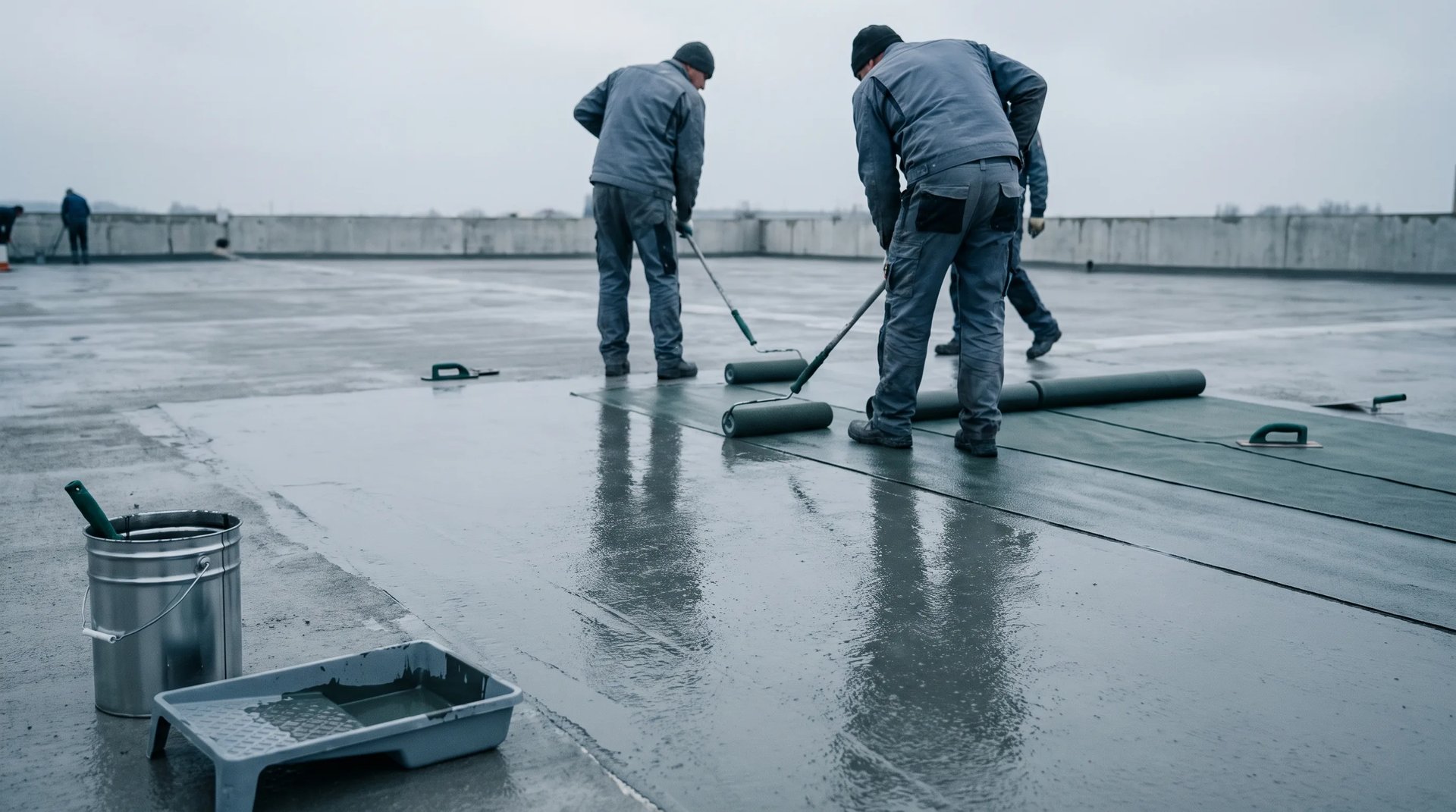
[SYSTEMS FOR CONCRETE]
Concrete waterproofing and repair systems
Membranes, admixtures, grouts and mortars, specified as one build-up.
[MECHANISM]
How the membrane cures
Moisture-triggered cross-linking means the base has to be damp — that one condition decides whether the bay can be coated today.
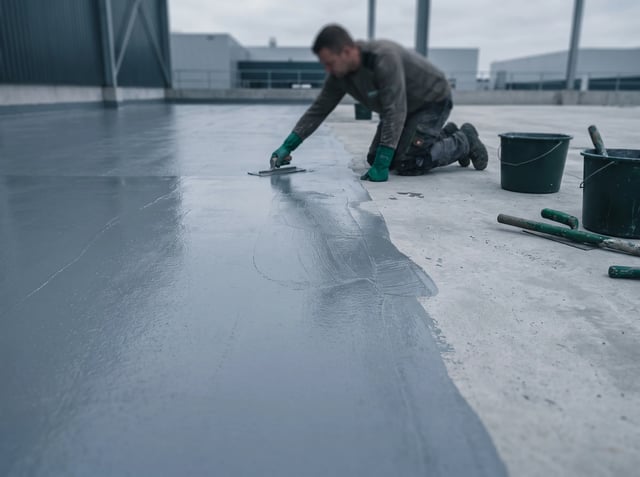
- 01
Wet the base
Substrate damp, not flooded — the reaction needs moisture, not a puddle.
- 02
Mix A into B
4 : 1 by weight, two minutes at 400 rpm; the clock starts now.
- 03
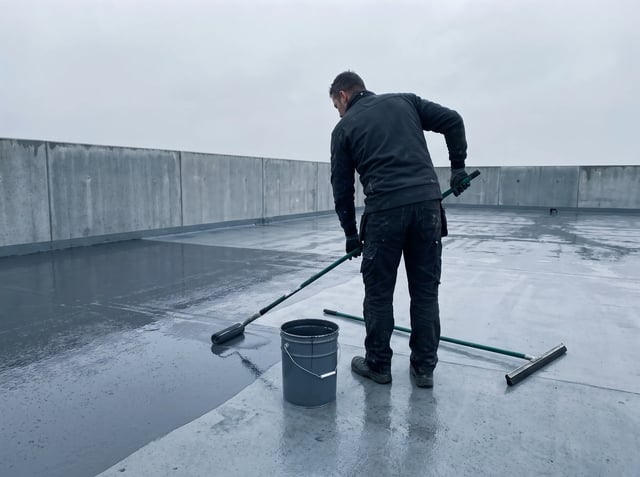
Roll within the pot life
Cross-wise second coat inside 40 minutes, before the skin forms.
[SYSTEM BUILD-UP]
System build-up, layer by layer
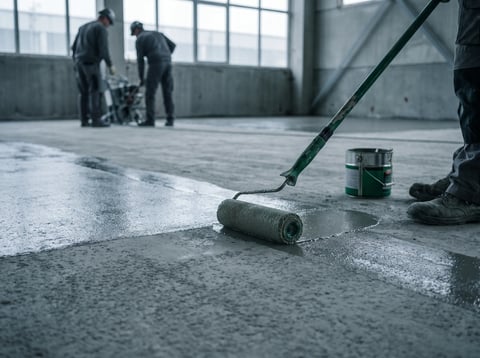 01
Primer
0.15 kg/m² · 4 h dry
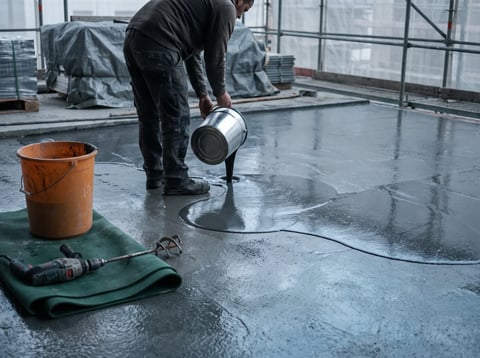 02
Membrane
1.4 kg/m² per mm
 03
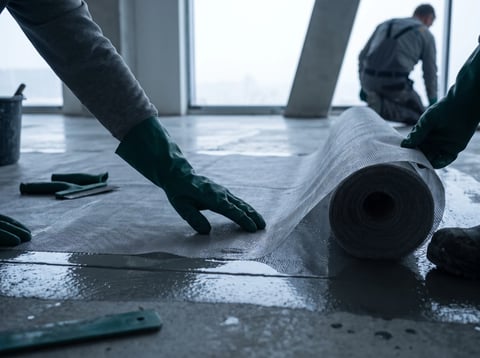
Reinforcement
60 g/m² mesh · 100 mm lap
 04
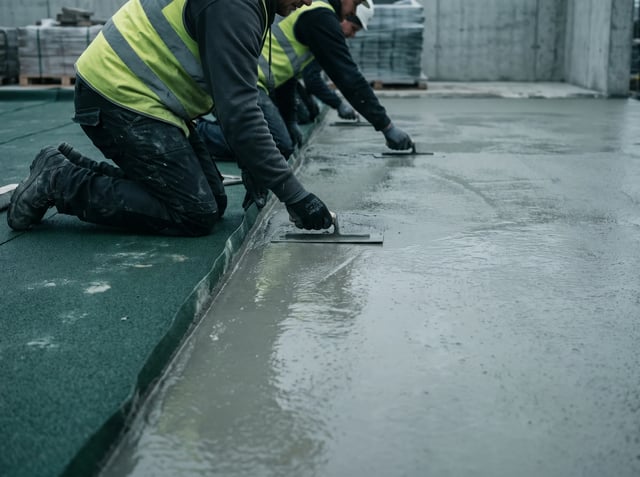
Protection
3 mm screed over
 05
Top coat
UV-stable · 24 h cure
[GRADE SELECTION]
Choose the grade by substrate
- Basement raft, below gradeVH-PU60480% elongation40 min pot lifeEN 14891
- Exposed roof deck, UVVH-SL45±25% movement−40 to 150 °CEN 15651-1
- Water-tight concrete, in-mixVH-CR280.4 mm self-healed1.0–1.5% of cementASTM C1202
- Anchoring and structural bondingVH-EP1203.5 MPa bond30 min pot lifeASTM C881
- Spalled cover repairVH-RM9055 MPa compressive4.4 L per 25 kgEN 1504-3 R4
- Cold pours below 5 °CVH-AD15set 8 → 2 minchloride-freeEN 934-2
[EVIDENCE]
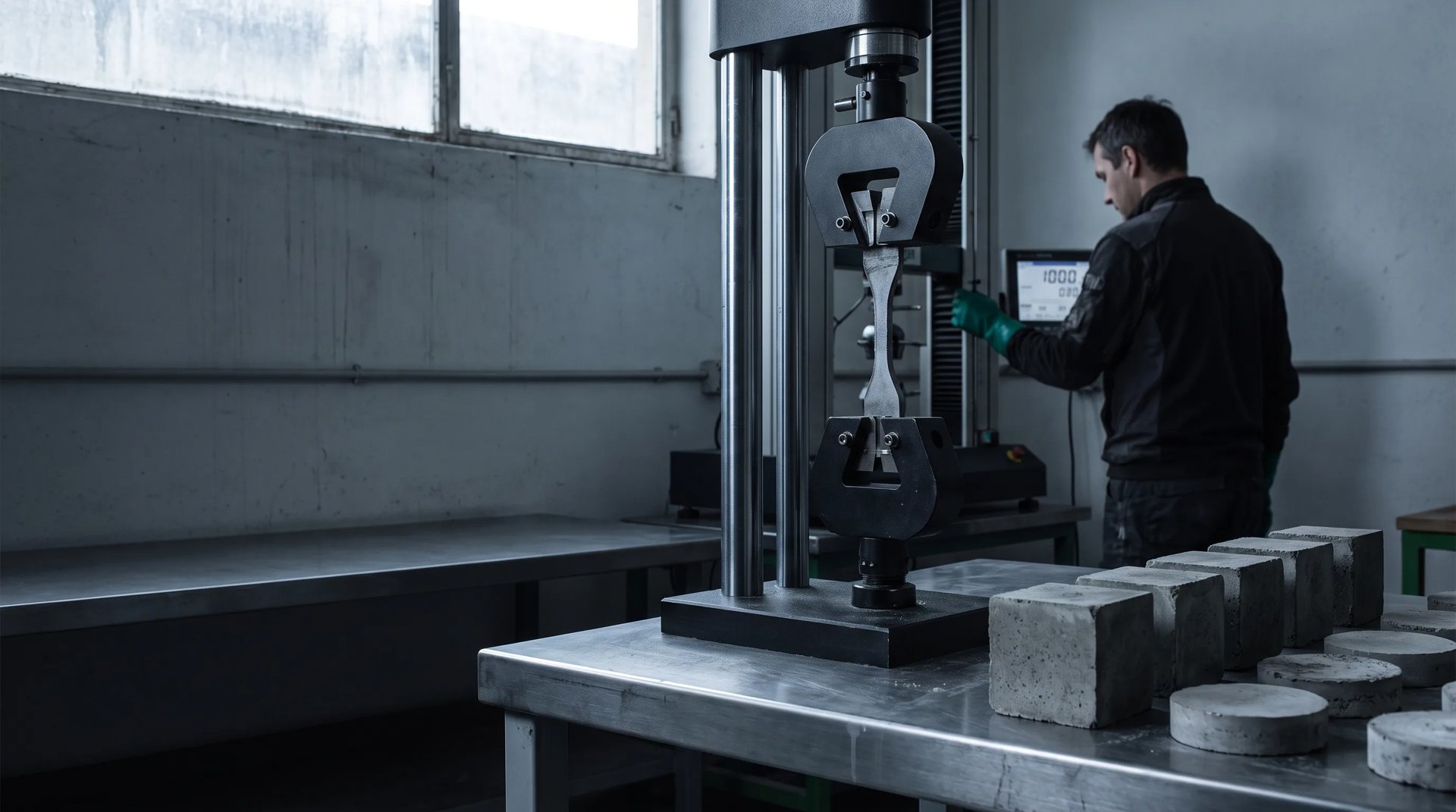
Proof under load
- 45,000 t
- Annual capacity
- 48%
- Exported
- 22
- R&D and QC
- 0.4 mm
- Crack self-healed
[APPLICATION]
Application step by step
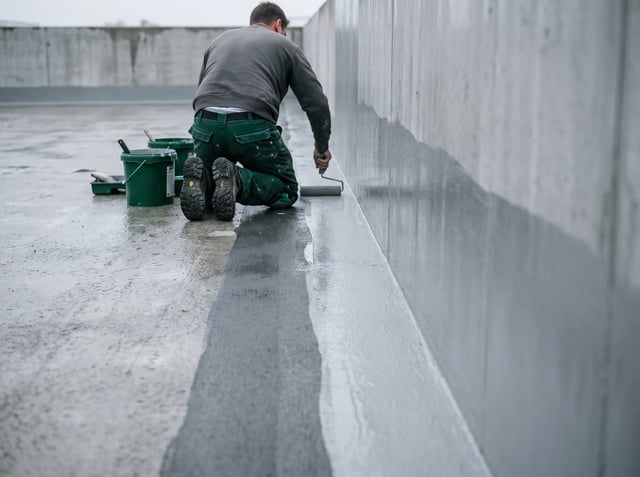
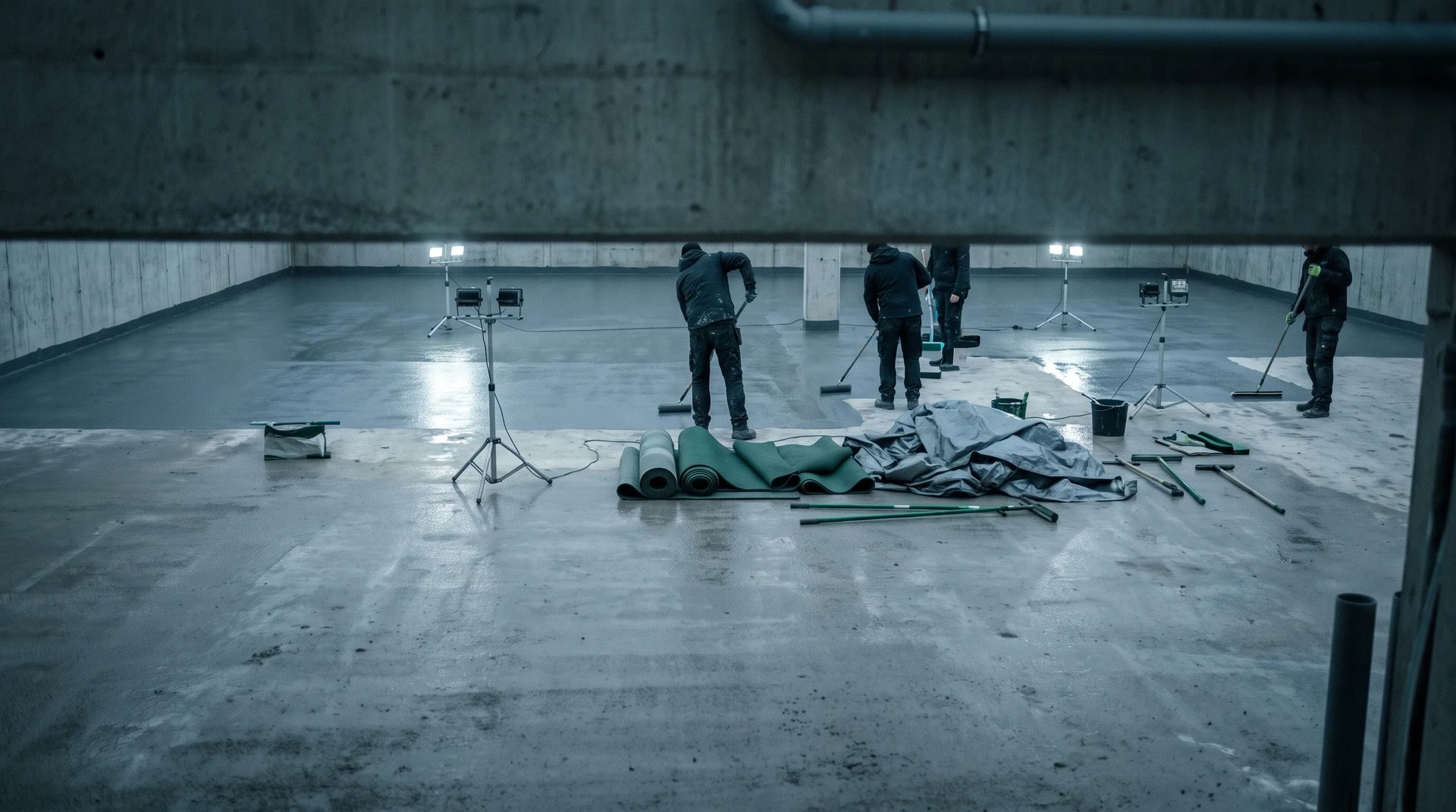
- Prepare the substrateShot-blast or grind; fill blowholes; dampen but do not flood.
- Hold the pot lifeMixed at 400 rpm for two minutes, then used inside 40.
- Two coats, cross-wiseSecond pass at right angles once the first is touch-dry.
[SITE LIMITS]
Site conditions and limits
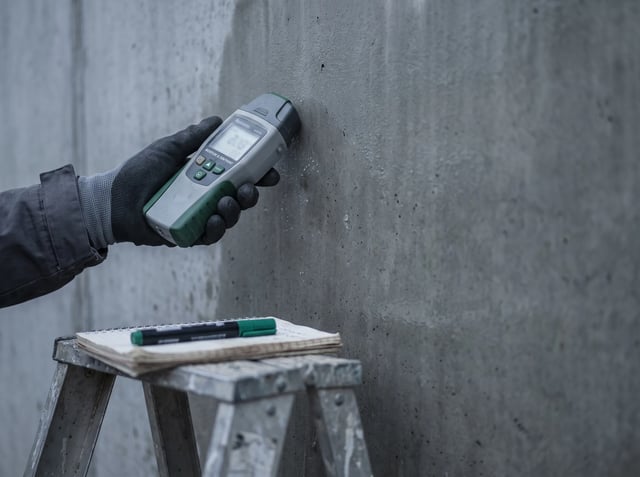
- Substrate moisture≤ 8%Above that the membrane blisters on cure.
- Ambient temperature5–35 °CBelow 5 °C switch to VH-AD15; above 35 °C shade the slab.
- Dew point margin≥ 3 °CMeasured on site, not read off a forecast.
[SAMPLE REQUEST]
Request a sample pack
Tell us the substrate and the area. We answer within 24 hours.
- Grade recommendationMatched to your substrate, exposure and climate.
- Data packTDS, test report and SDS for that grade.
- Sample1 kg kit, shipped from Nantong.